Showing posts with label herding. Show all posts

Wednesday, September 30, 2020

Sisters: Not Synonymous with Same


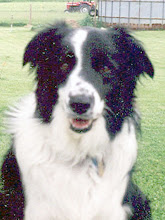
Frost and Gael wait their turn.

When I walk out into the pasture to train my Border collies, I bring a training plan, my hat, a whistle and lead line. I also bring a constant reminder: Gael and Frost may be littermates, but they are not the same.

I raised Gael from a puppy and bought Frost as a 2-year-old. They share the same parents, are both sensitive and both black and white. That's where the similarities seem to end.

Frost naturally has square flanks and a tendency to run wide; Gael naturally runs tight and has a tendency to slice her flanks.

Gael is very keen and focused on the sheep. Frost, too, wants to work the sheep, but is not as keen and more worried about listening to me.

Frost is a bossy, alpha female. Gael is submissive to other dogs.

Because of a broken femur and torn ACL, Gael is about a year behind in her training than Frost, and that difference is the hardest for me to remember. While I work with Frost to drive the length of the field and respond to whistle commands, I have to remind myself that Gael isn't solid on whistles, and that we're working on doing short drives correctly.

To avoid those sibling comparisons, I've started working on different elements. This morning, I worked on shedding, or splitting off a group of sheep, with Frost, while I did outruns and small drives with Gael. At the end of each session, I found myself telling each one that they did a good job.

This training strategy may also have another benefit: keeping sibling rivalry at bay.


Monday, May 11, 2020

Dog Training during a Pandemic

Frost practices penning over the weekend.

When I receive the Outlook calendar notifications, I'm reminded of where I planned to be this spring: at dog trials in Virginia, Tennessee, Wisconsin, Kentucky and Colorado.

Instead, I'm at home, training dogs and discovering some truths about myself, my dogs and training.

1. I like training and working dogs. Some love competition above all else. Others prefer to train. Others just love the farm work. The absence of competition made me realize that while I like the competitions, I also like working my dogs. With no competitions in the near future, I could stay inside when the cold wind blows (which it's been doing a lot this spring), but nearly every day I'm working the dogs. Even when moving the sheep to pastures, I find myself throwing in a little drive or flank work with the dogs.

2. Dog training has become more thoughtful and less stressful. Instead of reacting to a recent trial or preparing for the next one, I focus on what I, or the dog, need to work on. With my older dog Bubba, I've been playing around with shedding and penning, paying attention to where he is and where I am, and how we can impact the sheep. With my young dog Frost, we continue to work on driving, but throw in other exercises. This past weekend, we worked on penning and started some shedding training. If something's not working, I stop, think about what I can change and try again the next day. She's relaxed and eager to work every day.

3. More time means the young dog gets more practical farm work. If I have to move or sort sheep, and I'm in a hurry, I use an experienced dog. With more time, I can set up the situation where the young dog is likely to be successful. So Frost has helped move ewes and lambs, drive groups into the barn and other tasks.

But training in pandemic time has its downsides, too.

1. Staying at home doesn't put the needed miles on the dog. I still need to get Frosty out to new places where the terrain and the sheep are different.

2. Clinics or observations from experienced handlers are lacking. I tend to a wishful observer and benefit from professional input. While videoing a session helps, it's not the same as in-person observations.

3. It can be lonely. Sheepdog training has its highs and lows, and it's always more fun to have people to commiserate with and laugh about it.

Eventually my Outlook calendar will stop reminding me about canceled events, and eventually the dogs and I will get out and about again. I'm hopeful that we have benefited from pandemic time training.


Monday, January 6, 2020

What They Remember (Gael Returns to Herding Sheep)

I was more anxious than the dog.

Last week, Gael, my 2-year-old Border collie, returned to working sheep after a 13-month layoff.

A freak accident (hitting a board fence while playing with other dogs) caused a broken femur and torn ACL late in 2018. After two surgeries and months of rehabilitation she was deemed ready to go back to herding.

Before her accident, Gael had about 6 weeks of herding training. She'd been introduced to sheep in a calm and quiet manner and learned how to do balance work and some small outruns.

Would she remember that training? Or, would she be wild and crazed about working sheep?

My friend, Kay, who had started Gael on sheep, put Gael on a long line, walked her toward the sheep and asked for a lie down. Gael faced the sheep and dropped.

I held my breath, and then relaxed as Gael thoughtfully circled the sheep and did some balance work. Later, in the big field, when the sheep escaped to the barn, she quietly gathered them and brought them back. She hadn't forgotten her training.

During my time working dogs in Texas and the long drive home, I thought a lot about what dogs remember.

Bubba, my open dog, was raised, trained and trialed by Kay. I've been working him since May--and he's working well for me. However, when I sent him on a long outrun to gather a group of sheep near Kay, his muscle memory said, "bring the sheep to Kay." When a friend visits, Bubba remembers all the treats that friend fed him as a puppy. He sits in front of her and awaits a treat. When it's dinner time, he runs to his old crate in Kay's kennel and awaits his meal.

When I train dogs later today and in the coming days, I will be more conscious of what I'm teaching the dogs and making sure those are memories I want them to keep for weeks and years to come.

Meanwhile on the farm:
While I was away in Texas, it rained and rained. The cracks in the pasture from this summer's drought are almost gone and we have the dreaded winter mud. If given the choice between 30 or 40-degree days, I'll choose the 30-degree days, frozen ground and no mud. However, since there is no snow covering the ground, the sheep are happily grazing the pastures. So, for now, I'm keeping the slogging through the mud to a minimum.

.


Monday, November 18, 2019

Yelling Louder is Not the Solution

When I step into the sheep pasture with my Border collie, the training isn't just about him.

It's also about me.

As a trainer and handler, I'm trying to move from okay to good. So, I'm working on avoiding using commands as corrections.

This habit started innocently enough. My dog was running; the sheep were moving; I wanted to stop the action and said, "Lie down."

The dog didn't lie down.

So I repeated the command in a louder voice.

The dog still didn't lie down. So I yelled "lie down" in my meanest, angriest voice and then went running toward the dog.

By doing this, I was teaching my dog to ignore the soft and a-little-louder lie down command. He learned he didn't have to lie down until I got good and angry.

I was also confusing my dog. I was telling him what he should do (lie down) and yelling at him (correcting) at the same time.

For the past few years, I've been trying to break this habit.

It takes a lot of effort and planning.

Now, when I go into the pasture, I imagine my dog gathering the sheep and bringing them to me. As I ask for the lie down (in a soft voice or whistle), I imagine watching to see if he does. If he doesn't lie down, then I don't repeat the command. Instead, I step toward the dog, slap my hat against my leg and growl at him. When he lies down, I step away and let him continue working the sheep.

After imagining that whole scenario, I send my dog on the outrun--and am prepared to react correctly if he doesn't take the lie down.

When I'm thoughtful, when I plan, I usually do it correctly. But it's still a work in progress.

Meanwhile on the farm...

In the fall, we breed about half of our ewes, and I use the other half for dog training. I mark the bred ewes with grease markers.

After trimming hooves this weekend, my husband and I re-marked the bred ewes. Confession: It brings out my inner child. Anyways, I might have been a little excessive in my marking.


Wednesday, August 7, 2019

Because You're Never Too Old to...

Gael looking at the sheep. Some day, girl, some day.
Nearly a year ago, I was 2,250 miles from home, at the U.S. National Sheepdog Finals in California, and reflecting on the year behind and the year ahead.

My run had gone poorly, but I had no regrets about going. The coming year was going to be a rebuilding year.

Jack, the dog that ran in the Finals, was retiring. Emma, my other Open dog, needed more training to be competitive. I hoped to get Niki, my 4-year-old, progressing and completing courses; and Gael, my 1-year-old, was just starting her sheepdog journey. Maybe, by the fall of 2019, she'd be ready to start trialing in the nursery classes.

In sheepdog trialing and in life, things don't always go as planned.

Which explains why I've taken up jogging.

Gael, sweet Gael, broke her femur and tore her ACL during play time. (She plays hard).

She had surgery to repair the femur in late November. In mid-February, she had TPLO surgery to repair the knee.

By March, when she was supposed to start walking on the leg, she'd become quite adept at running on three legs, and the muscle mass in that leg was gone.

Border collies are clever and practical. Why use that leg when it was easier and faster to run on three?

And so the walking began.

At first, it was slower than an amble. I'd stop when she picked up and held her bad leg, and only go forward when she used it.

Eventually we picked up the pace, from 1 mph, to 2 mph, to 3 mph. But she only used that leg when on leash.

In June, when the summer temperatures were really heating up and the humidity was rising, we went to a canine physical therapist.

"You need to start jogging with her," she said. Just jog for 30 seconds and walk for a minute.

And so I did. I started slow and slowed more when she picked up and held that leg or tried to lope.

Border collies are clever and practical.

Gael was tired of being crated and walking slowly. She wanted to go.

She started putting that leg down and trotting. And, she's trotting faster and faster.

The heat hasn't subsided, and neither has the humidity. But I'm keeping up.

Maybe, just maybe, she'll return to working sheep by late fall.


Gael and Bubba on the evening dog walk.


Monday, May 6, 2019

Small Victories


In herding, as in life, it's best to savor those magical moments and small victories.

This winter and spring have been marked by walking with dogs, in biting winds and rain, over rough, frozen ground and through mud.

I've been walking my young dog who is recovering from a leg injury. And, I've been walking with Emma, my open trial dog, as she drives, or pushes, the sheep around the fields.

Emma is not a natural driving dog. She'd rather gather the sheep and bring them to me. But driving is a useful skill, and a necessary one in competitions.

So, I've been trying to build her confidence by walking with her, and I've been trying to make it more exciting by driving the sheep to a fence where she can hold them there.

All those hours of training and miles of walking paid off at the sheepdog trial this weekend when she brought the sheep to me, turned the post, and trotted off, pushing the sheep toward the panels.

She had more confidence, and I seemed to finally have the timing of asking for little stops, flanks and walk-ups along the way. With just little adjustments here and there, we kept those sheep walking in a straight line and through the panels. When she completed her drive, Emma and I maneuvered those sheep right into the pen.

While we bobbled on other parts of the course, and still have lots of shedding work to do, I considered the weekend a success, and savored those small victories.

I savored a big victory too. For the first time, I scored a 30-point drive.


Monday, March 18, 2019

Goodbye Jack

Jack arrived in the summer of 2016 when I was struggling to figure out sheepdog herding.

He was 8 and knew so much more about sheep and dog trialing than me.


In those first six months, I watched in awe as he gathered sheep and moved them around a trial course.

Eventually, though, I learned to become a participant, and we became a team. We started placing in trials.


And, in a storybook moment, Jack and I tied for first with Kay (his former owner and trainer) and his son, Bubba.

We qualified and went to the National Finals in Virginia in 2017.


I kept plugging away at learning more about sheepdog herding, and I started relaxing a bit and having fun.


Jack kept showing up at ever trial, finding the sheep and maneuvering them around the field. I called him my Steady Eddy.


When he qualified for the 2018 National Finals in California, both my friend Kay and my husband encouraged me to go. Jack was 10 then. His hearing wasn't as sharp and he was slowing down.

I went, driving across the country with him and two other dogs.

Although I'd retired Jack from competition last fall, I still used him as a farm dog, I could count on him to move sheep quietly and assertively, even in tricky situations.


This lamb somehow got a bucket around his midsection. Jack quietly walked the flock into a corner where I could catch the lamb and remove the bucket.

Some of my favorite times with Jack were visiting his home place in Texas and working Rambouillet ewes and lambs.

On his final visit to Texas a few months ago, we needed to move some sick sheep around a pond and to the barn. My friend Kay suggested we use Jack for the task.

"You do it, and I'll handle the gates," I said.

Just like that, Jack went back to work for her and I watched in awe as he walked the sheep toward the gate. When one ewe turned her head to the left, he quietly, instinctively, took a half step to the left, and that was that. The ewe continued forward and through the gate.

Throughout the winter, Jack kept working sheep, and I made plans for spring. Maybe we'd do a trial on a smaller field. Maybe I'd use him to set out sheep at a trial.

But that wasn't meant to be.

On Saturday morning, he stumbled out of his crate and just wasn't himself. His gums her pale and cold. A trip to the vet revealed a large tumor on his spleen, and he was bleeding internally.

And so I said good-bye to Jack, the best sheepdog I've ever had.


Jack's puppy picture.


Jack and Emma staring at the cat.

Thank you Beth Murray and Patti Sumner for the photos, and thank you Kay for giving me such a great dog.

Saturday, December 1, 2018

Breaking in the New Farm Hand


For the past few years, Jack's been my number one farm dog. He moves the calmly and confidently, and the ewes never question his power.


I trust him to take care of me and the sheep. This summer, when the lambs were finding all types of ways to tangle themselves in buckets, he was the one I counted on to gently move them into a corner where I could catch and untangle them.

But Jack is well into his 10th year, and Border collies don't live forever. Another dog needs to step up and help out.


Niki is eager to do the job. At age 4, she has the energy and drive to work all day long, and the ewes never question her power. However, we have not developed that trust that Jack and I have.

Building trust takes work, and a lot of time. This fall, I've used her as the primary chore dog. Because chore work sometimes turns into training sessions, chores often take longer. And it's seldom easier to use her rather than Jack.


This week, wet weather forced me to take the sheep on an alternative route to their winter pasture. Rather than taking them through the waterway, their journey took them into an unfenced part of the farm, over a culvert and down the driveway.

Because the sheep had never taken that route before and never been across the culvert, I didn't know how they'd react.

The easy thing would have been to use Jack for the job.

Instead, I took Niki.

I knew she'd have to push the sheep enough to convince them to go over the culvert, but not so much they'd be scared and do some silly suicidal sheep thing, like jump off the driveway and into the rocks below.

She moved the sheep out of the pasture, down the driveway and toward the culvert. When I gave her a lie down command, she took it and waited, watching the sheep drift over the culvert.


With a few flanks, they were safely in their new pasture, and I was trusting Niki a little more.


Thursday, September 27, 2018

Competing at the National Sheepdog Finals


Sheep at the National Finals.

I wish I could say that my run at the USBCHA National Sheepdog Finals went as I visualized.

But seven years of sheepdog trialing has taught me that things don't always go as planned. In this sport, no two fields are alike; no two groups of sheep are alike. Weather conditions change. The best handlers and dogs react and adapt to the changes, but even that doesn't guarantee success.

The open field at the National Finals.

In the smaller fields in the Midwest, the dog rarely loses sight of his sheep as he's running out to them. I have little experience with running on big fields, and it showed at the Finals.

Jack spotted his sheep, and kicked out wide to go get them. His path took him over a rise and out of sight. I thought I'd spot him as he neared the sheep.

I was wrong.

He went past his sheep, and we lost valuable time. Once he found his sheep, I gave a few too many commands, causing him to circle the sheep. While we got back on track during the drive, we ran out of time in the shedding ring.

While I was disappointed, I had no regrets about making the cross-country trek.

I've had the chance to compete on a challenging field with challenging sheep--and to see some of the best dogs and handlers in the country. And, once again, I've learned new lessons about sheepdog trialing.


Friday, September 21, 2018

Heading West Then

My first trip to the West was a quarter of a century ago.

It was summer, and my boyfriend, now husband, stuffed his Ford Bronco II with a leaky tent, foam mattress, cooler, AAA tour books and maps, and we drove. Our destination: the Badlands, Custer State Park, Mount Rushmore and Yellowstone.

The wide open spaces and hiking were spectacular.

The weather was not. It rained for days. In Cody, Wyoming, we awoke to an inch of water in our tent. In Yellowstone, we awoke to snow on top of the tent. We became experts at lingering in lodges, restaurants and laundromats.

At the end of the trip we were still talking to each other--and talking about plans to go back.

Two years later, we made the trek west again.

This time, we had a better tent and a Ford Ranger; we also traveled with 10 other people.

The highlight of that trip was spending several days horseback riding and camping along parts of the Oregon Trail near South Pass City, Wyoming.

That vacation was the last of our long car trip vacations. When given the choice between driving and flying, we opted to fly.

This fall, though, I am making a road trip west again. My destination, Alturas, California, is nearly 2,300 miles away.


Wednesday, October 5, 2016

The Pitcher or the Lazy School Horse?


Jack, the Border collie, arrived with lots of sheepdog trial and farm experience.

But I had to figure out the language of Jack.

At home, we started working with voice commands and have been trying to switch to whistles. We tested our progress during a sheepdog trial over the weekend.

The first run was not pretty. We got around the course, but he missed many of my commands, and we missed getting the sheep through the panels.

Jack the Pitcher?

"You looked like the catcher out there, and Jack, the pitcher," a friend observed. "You were giving commands, and Jack was shaking them off until you gave him one he liked."

Like many dogs, other animals, and humans, Jack favors turning one direction over the other, and he doesn't like to go off balance.

Jack the School Horse?

"You've got to think of him as a lazy school horse," his owner and trainer said. "He knows how to do the work, but he's a bit laid back. If he doesn't take a command, scold him a little, he'll do it."

I'm not sure what analogy worked, but I marched to the post on the trial field on Sunday with a different attitude--and, though there was some fussing at one panel, he moved the sheep through all three panels. We left the field with a much higher score.


Friday, December 4, 2015

When the Border Collie goes to the Office...


While I love my job, it often interferes with fun--like sheepdog trials. I'm constantly balancing and scheming to make them work.

On some days that means Raven, my Border collie, comes to work with me so that we can leave afterwards for a dog trial. If the weather is cool, she snoozes in a crate in the car.

But on a recent day, I brought her to the office so that she could meet my co-workers.

She scanned the room, stuck her nose in the air, and looked at me.

Where were the sheep?

Now 4 years old, Raven has been doing the dog trial and dog clinic circuit so long that she associates my overnight bag with sheep and fun. And my office had no sheep, and was thus no fun.

I encouraged her to walk from cubicle to cubicle to visit my co-workers. But I could see the thought bubbles above her head: Boring, boring, boring.

In mid yawn, a co-worker walked by carrying her lunch. Raven's ears perked and her eyes locked in on the food. Sticking her nose in the air, she turned to stare at the cafeteria door.

For if a Border collie cannot have sheep, food is a nice second option.


Sunday, November 1, 2015

Better--Without the Dog

For many farm tasks with the sheep, I rely on a Border collie for help.

Need to move sheep to another pasture? I call a dog to assist. Need to persuade sheep to go into the barn? I call the dog.

But just because I have a dog trained to work sheep doesn't mean that the dog is always the best tool for the job.

When sorting sheep in a stall or close quarters, I prefer to work alone, without the dog. Why add a dog to the close space and risk the dog or me getting hurt?

The one task that I've always struggled with is the trailer load.

Sheep fear dark, enclosed spaces--and they don't care for the rattle of the trailer. Dogs and people cannot persuade sheep that it's a good idea to go inside a trailer. My husband and I get the task accomplished, but not without high anxiety for sheep and people.

Until this year.

This fall, we parked the trailer in the pasture where the market lambs were living. Once a day, I'd put some hay in tubs inside the trailer. Within hours the sheep figured out the trailer was a place for food. They jumped in and out of it throughout the day.

On the morning they were to go to the butcher, I put some hay inside the trailer. The lambs jumped inside to snack on their morning meal. I slid the trailer door shut.

"Lambs are loaded and ready to go," I told my husband.

Neither of us had touched a lamb during the loading process.


Wednesday, July 29, 2015

We ask, they deliver...

When my brother attended a sheepdog trial earlier this month, he looked around and asked, "How many dogs are here?"

"One hundred and fifty, maybe 200," I guessed. More than 100 were entered in the trial. But people coming to trials often bring retired dogs and pups not yet ready for competition.

"And there are no dogs barking, no dogs fighting, none misbehaving," he said.

I took a moment to think about what I expected of my Border collies--and what they deliver.

My 4-year-old competition dog, Raven, and 1-year-old pup, Niki, have traveled extensively.  Before she was even a year old, Niki had traveled to dog trials in Ohio and Kentucky and made a trek to Texas. She was expected to travel well in a crate, be quiet (though she wasn't always), interact with other dogs and people, and walk nicely on leash.

Raven has traveled to Texas and back several times--as well as trials in Ohio, Kentucky, Indiana, Illinois, Michigan and Virginia. She stays overnight in motels--and behaves like a champ. Of course, Raven's expectations are much more than being a good traveler and getting along with people and dogs.

On the trial field--and on the farm, she is expected to listen to her commands, to be nice to the sheep, to leave the chickens and cats alone.

At sheepdog clinics, I ask her to move sheep to designated spots on the field--and lie quietly while another dog comes and takes the sheep. Sometimes, she works off and on for hours. And, when not working, I ask her to lie quietly in a crate or tied to a post or a fence.

During one particularly hot sheepdog clinic, a handler marveled that a half-dozen Border collies were tied along the fenceline in the shade--and on the other side of the fence were the sheep lying in the shade. No dog was harassing the sheep. No dog was barking. The dogs knew they were expected to be quiet until it was their turn.

Those high expectations and hard work make herding dogs some of the happiest, most content dogs I know.

Tuesday, June 2, 2015

One Day She's Wearing a Dress, then Next She's Off to School...


I picked her out when she was 5 weeks old.

And visited her until she was ready to leave her litter mates.


At 10 weeks of age, I don't know if she's going to be a good sheepdog. I just know her parents are--and that she's cute.


I dressed in her a sundress once. Yes, I know Border collies don't wear dresses, but a co-worker gave it to me. Even the cat knew she looked ridiculous.


The older dogs were less than impressed by Niki, and still are. But 3-year-old Raven was willing to play with her.


To get her used to car rides, I loaded her in the car and took her to the nearby Stillwater Prairie, where we took  long walks.


She traveled to sheepdog trials with Raven and me--and posed for Patti.


I tried to teach her to respect the cats.


But Trick wanted to play with her.


We survived three 7-week sessions of obedience class. She became more attentive and learned to sit and stay and down--but was too much of a busy-body and pup to be the star pupil.


At home, we played the "trade me" game, and she learned to give up shoes, gloves, and deer legs.


She grew long-legged, and she joined the other dogs for the daily treks around the hay fields and ponds.


Last week, at age 10 months, she went to the sheepdog trainer. While I'm anxious to see if this pup will take to herding like her mama, I was sad to see her go.

I miss having her at my feet, chewing a bone in the mornings. Though, it is nice to leave my shoes on the floor and know they'll be in the exact same spot when I return.


Sunday, May 31, 2015

Uh-oh...I Lost My Sheep

In a matter of days it happened. The pasture went from lush to waist-high.


And, when Raven, the border collie, couldn't see the sheep through the grass, I knew it was time to do something.


So, I've started mowing the pastures.


We usually mow pastures about three times a year. In early June, July and late fall. It's a process that crawls along--the tractor speed varies from 1-2 mph. And there are acres to mow.

But it's a break from digging, rototilling, weeding and barn cleaning. When mowing, I watch the swallows swoop behind me, scooping up bugs. I savor the breeze brushing my skin. And, I have hours to think and daydream.

When finished--and we're not there yet, I have a place to work the dog.

And the sheep look lovely on freshly mowed pastures.


Sunday, September 14, 2014

And Now for a Name...

Meet the new pup!


She came into this world the day before our sweet Mickey left it.

For the past few years, I've been admiring her mama work sheep. What this little girl will do on sheep won't be known for a while.

In the meantime, she learn about manners and farm life.


But first, we have to come up with a name.

She came with the name of Nickie... and I go back and forth about whether to keep it.

I'm up for suggestions...


(I think Raven is happy to have some young blood on the farm, but is looking forward to her growing up a little so they can play).