Showing posts with label woods. Show all posts

Tuesday, November 24, 2020

Pandemic Chainsawing

 "The battery-powered chainsaw may be the best present you've given me," I say to my husband.

"What about the KitchenAid stand mixer?"

"It's nice, but the chainsaw..." 

Farm life consists of encouraging some things to grow and discouraging others. I chop thistles from the pasture, and plant clover; I coax young tomato plants along while taking a hoe to morning glory vine; I check on the sheep daily, moving them to the grassiest, most lush pastures, while securing fence to keep the coyotes out. Red-tailed hawks and bald eagles may be admired from afar, but they'd better stay away from the chickens.

Brush and trees are a constant battle. Brush encroaches on the crop fields; trees grow in the native grass and wildflower areas; trees fall across paths in the woods. Hand-held loppers are not enough for the job.

Cathy Essinger snapped this photo when I stopped to cut a few branches at her house. I'm wearing my visiting-my-friends-outdoors clothes, not my brush-clearing gear.

Last year, a friend introduced me to a battery-powered chainsaw, and I was intrigued. Lightweight and easy to start, I fell in love.

So, while others may be baking their way through the pandemic. I'm clearing brush. This fall and winter, weather-permitting, I try to spend an hour or two each day cutting brush or trees. And, I'm discovering it may be the perfect activity for these pandemic times.

The emerald ash borer killed the ash trees in the woods a few years ago, so dead trees fall frequently.

The coronavirus is, both literally and figuratively, lurking. It's in the news; it's a factor in so many everyday decisions: to wear a mask or not to, to stay home or go out, the risk-level of many activities. But, for two hours everyday, while clearing brush, I don't think about pandemics, politicians or other news.

I delight in the squirrels leaping from tree to tree, the red-headed woodpeckers and blue-feathered Jays, the occasional rabbit and deer. When clearing the wildlife strip, I sometimes talk to the neighboring cows.


I marvel at how how quickly some trees grow, curse the honeysuckle and try to avoid getting stuck by black locust thorns.


But, I also have a real sense of accomplishment. After a few hours, I can look at a strip of land that no longer has trees peeking above the grasses, or I have logs that can be split and used to heat the house.


Usually I'm also a little sweaty and tired. Cutting brush and especially dragging or moving it is physical work. 

But, as my friend points out, that's one of the advantages of a battery-powered chainsaw: it tells you when it's time to quit. Depending on the project, the battery lasts between 1 and 2 hours.


When I tell my husband that's another reason the chainsaw is so perfect, he responds, "You know we have a second battery, don't you?"


Thursday, February 16, 2017

A Sweet Treat

I spent my lunch break how I'd like to spend every lunch break: doing something that makes me forget about the paying job.

Walking in the woods and lugging buckets of sap will do that.

It's maple syrup time in Ohio, and like in years past, I help the local park district with sap collection. The park district employees and volunteers tap a couple dozen trees each year and boil the sap in a sugar shack built to replicate how syrup was made 100 years ago.

Sap collection is done daily. Sap flow depends on outdoor temperatures and the sun. Sunny days with temperatures above freezing and clear, freezing nights are ideal for maple syrup production.

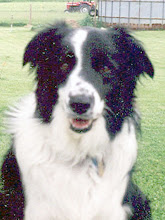
Apparently they aren't ideal for hikers. When I was collecting sap, temperatures were in the mid-30s--and my Border collie and I were the only ones in the park.

We could listen to the birds sing, the occasional rustle of squirrels on the decaying leaves, the river water meandering southward.

Gathering the collection containers, I walked from tree to tree, popping the metal coverings from the buckets hanging on the trees, and emptying the sap into my collection containers. A few buckets had ice floating in the sap. Some contained a few inches of sap while others were half full.

When my collection buckets filled, I hauled them back to the sugar shack, dumped them into a 30-gallon barrel and repeated. After the second trip to the sugar shack, I removed my coat and hat. Hauling sap is a physical workout.

But it is a joy to be in the woods, walking on uneven ground, feeling cold air on my cheeks and listening to the sounds of nature.

It took me just under an hour to collect about 30 gallons of sap. When finished, I returned to work, refreshed and ready to focus on the task at hand.

Sunday, September 13, 2015

The Fall Tree Walk

It is mid-September and time to identify and mark the standing dead trees in the woods. This fall we are cutting and splitting wood to burn in the winter of 2016-17.

Identifying standing dead is easiest when leaves are on the trees, so I schedule this task when the weather cools enough to settle the mosquitoes somewhat.


For the tree identification walk, I prepare to spend a lot of time looking up, looking for trees without any leaves and trees that have shed their tiniest branches.


Of course, I must also watch where I'm walking. For this is the time of year for spiderwebs. Floating leaves are everywhere in the woods--and I know they aren't magical, they're signs of spiderwebs.


It's also the time of year when burrs are best at grabbing clothing and hanging on.


I soon discover that I don't have to spend my walk looking upward. For the emerald ash borer has hit our woods. Many ash trees are dead; many will be dead by next year. I only have to look for the borer's holes in the trunk.


As I walk, I find dozens of dead trees with little effort. But I take no joy in this. I am left to wonder how the woods will change, how it will adapt in the coming years.

Monday, December 16, 2013

Looking for the Ideal Snow for Skiing

It turns out that the perfect snow for snowman-making is not the perfect snow for skiing.


On Saturday morning, the snow was falling in big, heavy flakes. So, I called Tag and Caeli, and we set off for the farm and pond across the road. But, when I skied up a slight incline, I ground to a halt.

The wet snow clumped under the scales of my skis. So, I stopped frequently to remove the clumps.Skied. Removed clumps. Skied.

Eventually, I returned home with two tired dogs.

But, it was a pretty morning, and the snow was falling in big, heavy flakes. So, I called Mickey and Ben, and we skied the harvested corn and bean fields. It was flatter ground, so I stopped less frequently.

We returned home, wet and covered in snow.

It rained Saturday afternoon. Then the temperatures dropped and the wind picked up speed overnight.

On Sunday morning, the snow was crunchy on top and granular beneath the surface. But it was snow -- and a chance to ski.

The wind and rain had coaxed the remaining leaves from the trees, making for a pretty pattern.


Except for a few birds in the fence rows, I saw no wildlife. I'm sure the crunchy sound I made scared them away.

And the wind rushing across the fields made the last quarter-mile feel like a mile.


But I'm grateful that when it snows, I can step outside, clip on skis and go. That always makes up for the less-than-perfect snow.